
Transgression in the Late-Capitalist Landscape
Against a binary supposition of right or wrong


I have spent most of the week home while the rain downpours outside this week, trying desperately to recover from the cold that has been circulating that I finally succumbed to. While my body undoubtedly appreciates the rest week, my headcold has wreaked havoc on my headspace and my attention is mostly absent, which means I’ve spent too much time wishing I could get something done. As someone who writes about unproductive expenditure, I should be better equipped for this than I inevitably am—I never feel like I have enough time for what I want to do to begin with, so when I have time I can’t make use of I get frustrated.
Today I finally had a modicum of focus, and I took the deay to read the earlier English translation of Bataille’s Madame Edwarda (published as The Naked Beast at Heaven’s Gate), and also to rewatch Ian Kerkhof’s The Dead Man 2: Return of the Dead Man. Despite it’s title, the latter mentioned film arguably derives more inspiration from Madame Edwarda than it does from Bataille’s novella The Dead Man, though there is some oblique inspiration that runs through. Madame Edwarda is, for me, one of the cornerstones of my thought, and remains one of the best narrative works I’ve ever read. Kerkhof’s film as well approaches a level of sublimity that is unmatched in the rest of his work that I’ve watched—and as an aside, while I don’t know the full narrative, I do recognize that a name change was involved at some point (that I’m not fully sure if it need be applied retroactively?)—the films he’s since made under the new name (Aryan Kaganof) are far less interesting to me than what I’ve seen under Ian Kerkhof, both in terms of production and content. But, regardless, The Dead Man 2 has moments of pure transgressive sublimity, with interior scenes of extremely rough leather sex, moments in an otherworldly bar, and external scenes in industrial landscape, a sun drenched beach jaunt, and a photomontage in a carwash (which for some reason is always the scene that has penetrated the narrative space of my memory, sometimes even bleeding into my thought of the two Bataille narratives, obviously anachronistic).
All of this to say, I have returned to the space of transgression, which is naturally a regular touchstone on this page, but also I have been considering what transgression really looks like in 2026. The Neo-Passeism blog reshared Justin Isis’s write up on transgression from March of 2025, appropriately pulling the following quotation:
So-called ‘transgressive fiction’ as typed out by Bourgeois Caucasian Family Men and Tattooed Normie Mom types has to be one of the most genuinely ludicrous and pathetically virginal examples of contemporary grifter fraudulence. The aesthetic is redolent of the worst of the long-expired ‘Apocalypse Culture’ of the 1980s, by way of secondhand ideas from William S. Burroughs (himself a rather dated influence at this point), all delivered in the semiliterate prose of American-style horror fiction and flaccid Dennis Cooper pastiche. The only thing being ‘transgressed’ is the patience of anyone with taste, discernment, and familiarity with real life.
(As yet another aside, I have made similar complaints to friends in private about the abundance of writers who seem to be attempting to write about visceral corporeality without seemingly having any insight into how their own body functions in the world at large and only a back catalog of horror movies to resort to—but this is not really the point here.)
Adjacently, in discussing how certain realms of fashion tend to get associated with “transgression” and how, generally, in the cultural landscape of the present moment, this just links back to reactionary neo-fascist sentiment slowly dripped through reddit and 4chan in order to fuel the culture war. In a way this is the inevitable outcome of what gets disparagingly referred to as “woke” culture that grew out of accountability and identity politics. As usual, when nuance is lost everything gets pushed to edges that postulate only a binary positioning rather than limit-states.
This to me is a problem, because on both sides of the spectrum the idea of transgression no longer actually becomes about pushing boundaries, and it instead becomes either violating the boundaries of another or, moreoften than not, policing one’s own boundaries. A refusal of permeability, and unwillingness to go beyond. An idea is defined and held as static rather than as constantly moving.
But, beyond the sort of established issue defined above, it becomes problematic when art attempts to actually manifest transgression because regardless of the amount of nuance that has gone into the production of said work, a majority of the audience will weaponize the mere act of transgression rather than considering the work itself. Because of this, I think it’s hard to push for transgressive work in a less-contained context because of the current atmosphere this lends itself to (lest we forget, after the Nazis attempted to assume Nietszche as one of their own, it took nearly a century for French intellectuals like Bataille to recuperate his work, and even now he gets perpetually misread). Nearly the entire body of work left behind by the CCRU has been misread and misappropriated by reactionary tech rationalists, despite the valliant efforts of many involved to save it from that cesspool.
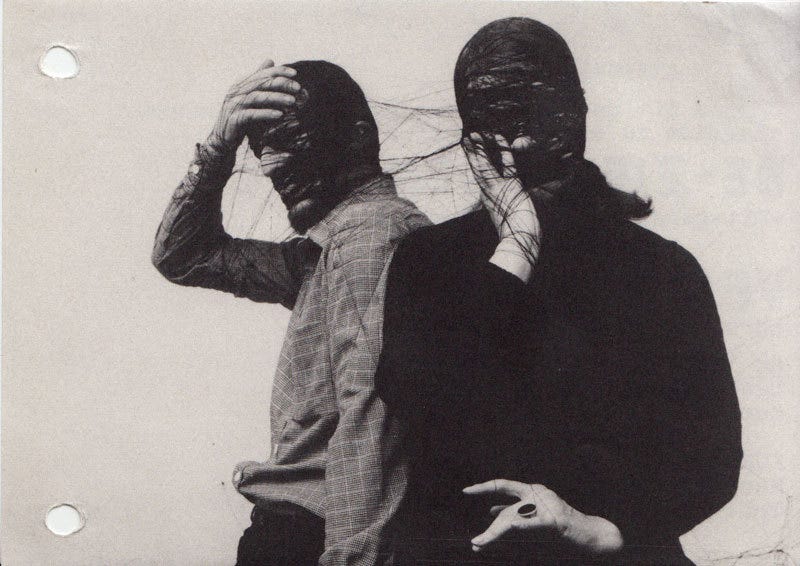
So, the question I am arriving at, through all of this, is knowing how important transgression is for me personally, as a vessel, how can one push into the world with this throughline at the current moment without having to prepare for the worst sorts of misunderstandings and an infinite necessity to be en garde with anyone who doesn’t take the time to engage beyond surface level? I think one of the ways I have addressed this in the past is the combination of my work being intentionally transgressive of my selfhood, in terms of the creative and performative work, but then also being very much tied to these essayistic pulses that I try to dump with regularity. I can’t account for anyone else’s response to work that’s in the world, but as someone who feels comfortable using language as a tool of expression, I can certainly account for my own, and that might be the best plan of attack I can take in the moment.
Great read. Regarding the quote from the Neo-Passeism blog: I would argue that true transgression is internal before it is aesthetic. Existential combustion does not require marginal living. It can unfold within an externally stable life. A monk can be more transgressive than a punk.